
Digital Twin of a Load Test for a High-Speed Railway Bridge
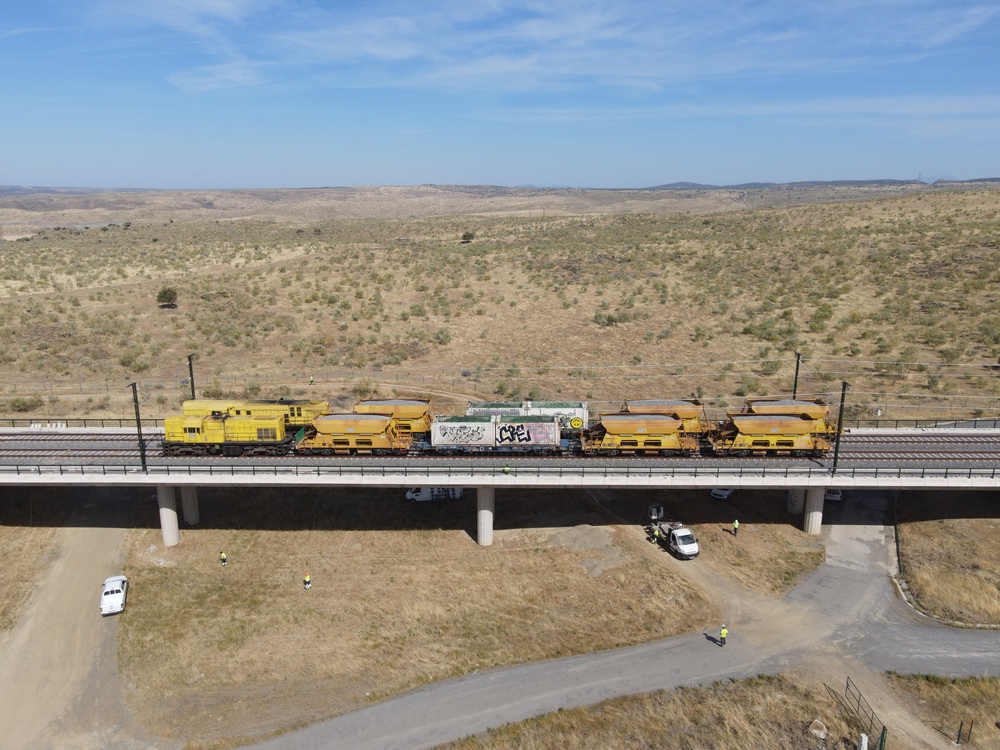
This project involved the complete digitization of a load test for a
high-speed railway bridge in Extremadura, Spain. The process integrated BIM, sensor data
collection, finite element modeling, and verification of structural performance in accordance with
Spanish national standards.
Data collection and Performance Validation
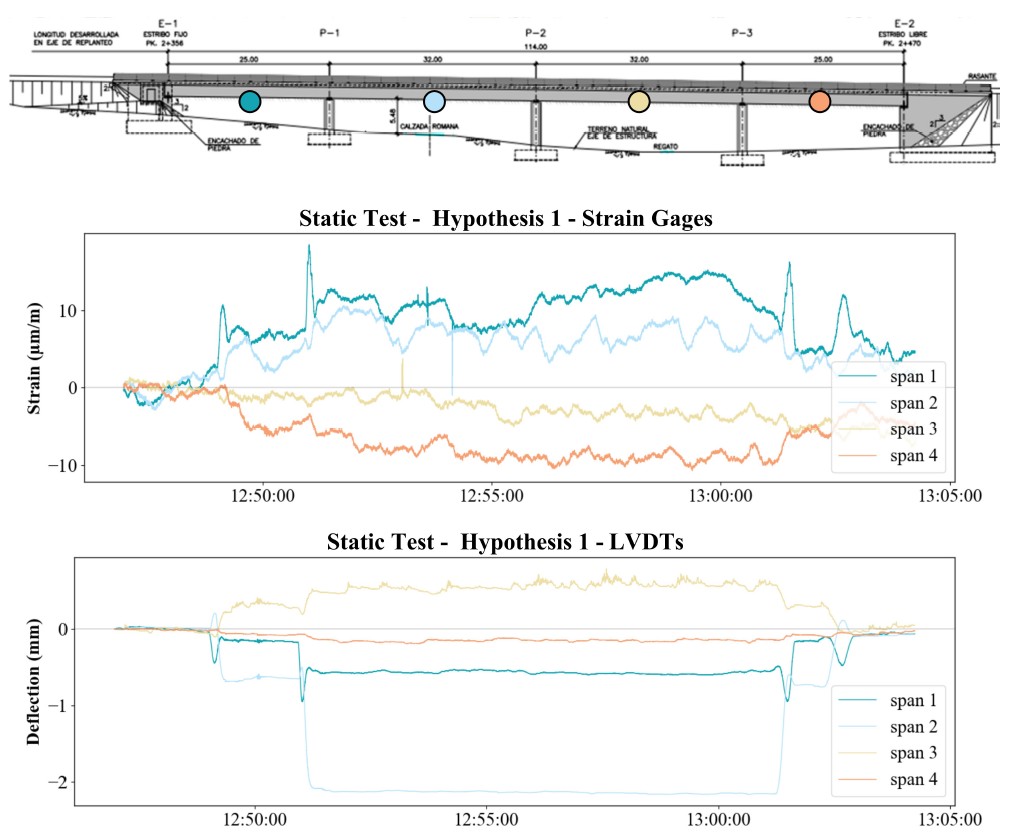
To capture the bridge’s behavior under load, static tests were
instrumented using LVDTs (Linear Variable Differential Transformers) and strain gauges, while
dynamic tests employed accelerometers. All sensor data was uploaded to an IoT platform for
centralized storage.
Custom Python scripts were developed to process the data, extracting
key performance indicators required to assess and validate structural behavior as per the Spanish
national standard NAP 2-4-2.0.
Resulting Digital Twin
The complete dataset — including the BIM model, finite element
analysis, raw and processed sensor data, and verification results — was integrated into our
Knowledge Graph–based Digital Twin system.
Users interact with the Digital Twin through an
intuitive human-twin interface, enabling insightful visualization, traceability, and informed
decision-making.
Read more about the project:
Ramonell Cazador, C. (2025). Graph-driven digital twins as assistants to bridge maintenance (Doctoral dissertation, Universitat Politècnica de Catalunya, Departament d'Enginyeria Civil i Ambiental).
Chacón, R., Ramonell, C., Posada, H., Sierra, P., Tomar, R., Martínez de la Rosa, C., Rodriguez, A., Koulalis, I., Ioannidis, K., Wagmeister, W. (2023). Digital twinning during load tests of railway bridges - case study: the high-speed railway network, Extremadura, Spain, Structure and Infrastructure Engineering.